Flat Tow Setup in Copley, OH
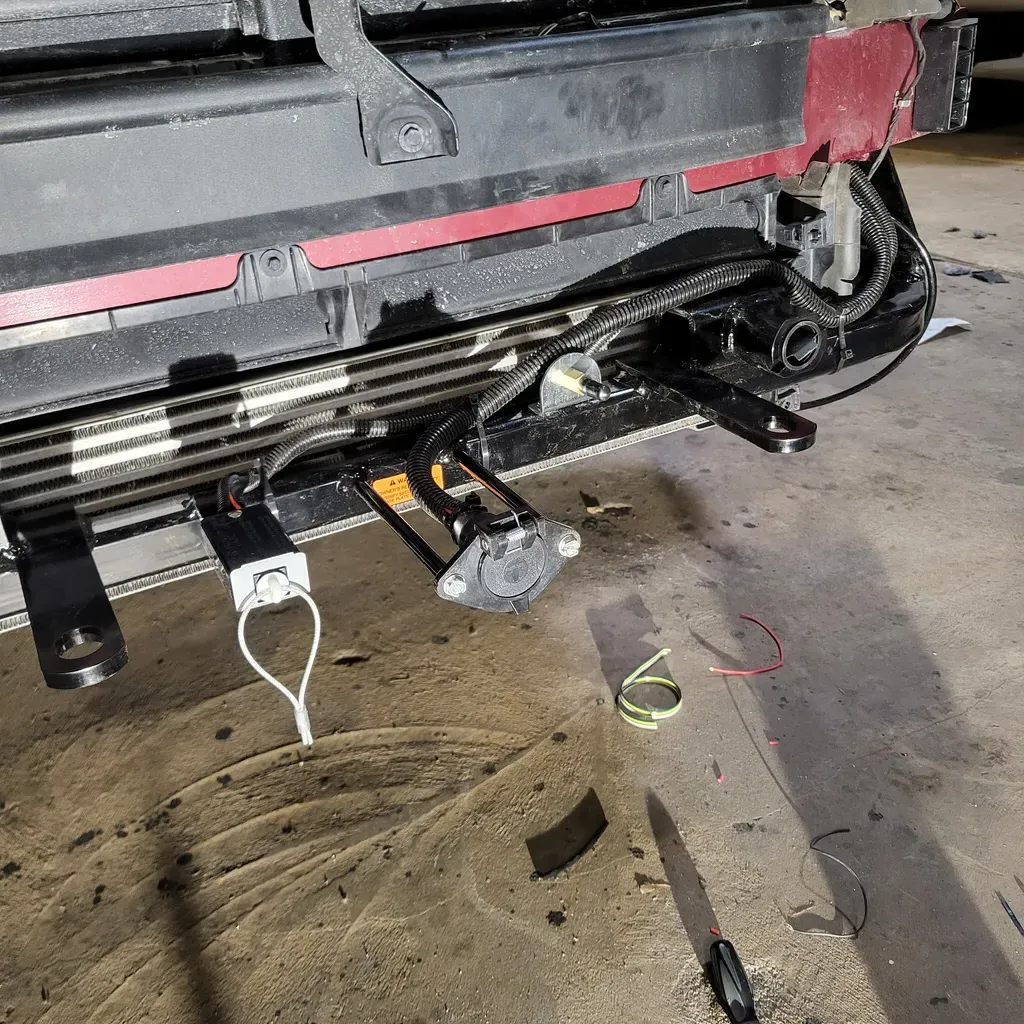
Flat towing a vehicle behind your motorhome requires precise setup. The baseplate, tow bar, wiring, and supplemental braking system all have to work together correctly, or you risk damaging your towed vehicle's transmission, voiding your warranty, or creating a dangerous situation on the highway. At Four Wide Storage in Copley, OH, our technicians handle flat tow installations with the experience and attention to detail the job demands.
Not every shop knows how to set up flat towing
Why can't every shop set up a flat tow system for your motorhome? Flat tow setup involves more than bolting on a bracket. The baseplate has to be matched to your specific vehicle, mounted to the frame at the correct locations, and wired so your toad's brake lights and turn signals stay synced with your motorhome. Then there's the supplemental braking system, which has its own installation requirements. Most general repair shops and even some RV dealers don't set up flat tow systems regularly enough to know the details for every vehicle. Getting it wrong can damage your vehicle or create a safety hazard on the highway, so real experience with these systems matters.
Towing the wrong way destroys your transmission
Can towing your vehicle the wrong way really destroy your transmission? It really can, and it happens faster than most people expect. When you flat tow a vehicle that isn't approved for it, or skip the correct procedure for one that is, the transmission runs without the lubrication it needs because the engine isn't running. The heat that builds up can warp gears and burn out clutches in a matter of miles. Transmission replacements typically run several thousand dollars, and in many cases that damage also voids your manufacturer's warranty. The cost of a flat tow setup done right is a small fraction of what a failed transmission costs to repair or replace.
Many newer vehicles can no longer be flat towed
Why can many newer vehicles no longer be flat towed? Car manufacturers have redesigned transmissions and drivetrains with electronic components that simply weren't built to handle being towed with the drive wheels on the ground. Some vehicles that were approved for flat towing in one model year lost that capability entirely the next because of new electronic shifting systems. The GMC Terrain and the Chevy Equinox are well-known examples of this. Before you buy a tow vehicle or start setting up a flat tow system, verifying your specific year and model against manufacturer documentation is essential. We always confirm compatibility before starting any installation so there are no surprises after the work is done.
A proper baseplate install takes experience, not guesswork
Why does a baseplate installation require real experience rather than guesswork? Every vehicle is different, and baseplate installation doesn't follow a universal process. The mounting points have to align with the specific frame structure of your car or SUV, and many installs require cutting into the front bumper cover to reach the frame. The wiring for brake lights and turn signals has to be routed through the vehicle correctly without interfering with anything else. An install done with the wrong hardware or incorrect mounting positions can stress the frame under towing load. Getting it right takes someone who has done your specific vehicle before, or at least has extensive experience with similar setups.
Wrong brake setup puts you and other drivers at risk
How does a wrong brake setup put you and other drivers at risk? When you flat tow a vehicle without a properly working supplemental braking system, your motorhome is doing all the stopping for both rigs combined. That increases your stopping distance significantly, especially at highway speeds or in wet conditions on roads like those around the I-77 corridor. Ohio law requires supplemental braking on towed vehicles over 2,000 pounds, which covers most cars and SUVs. Beyond the legal requirement, a system that isn't set up correctly can cause the tow vehicle to push into the back of the motorhome during hard braking, making the whole rig much harder to control in an emergency.