
Roof Repairs, Replacement & Resealing in Copley, OH
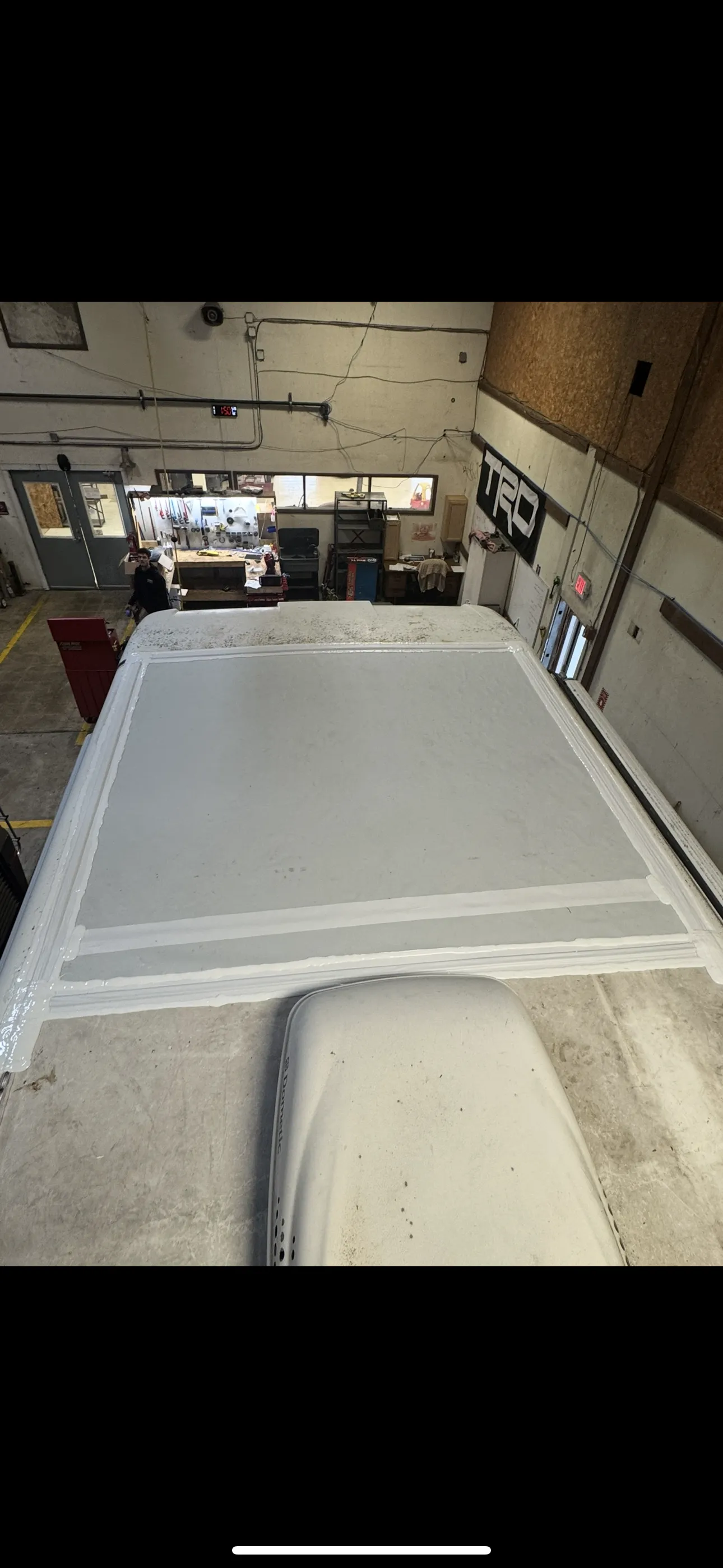
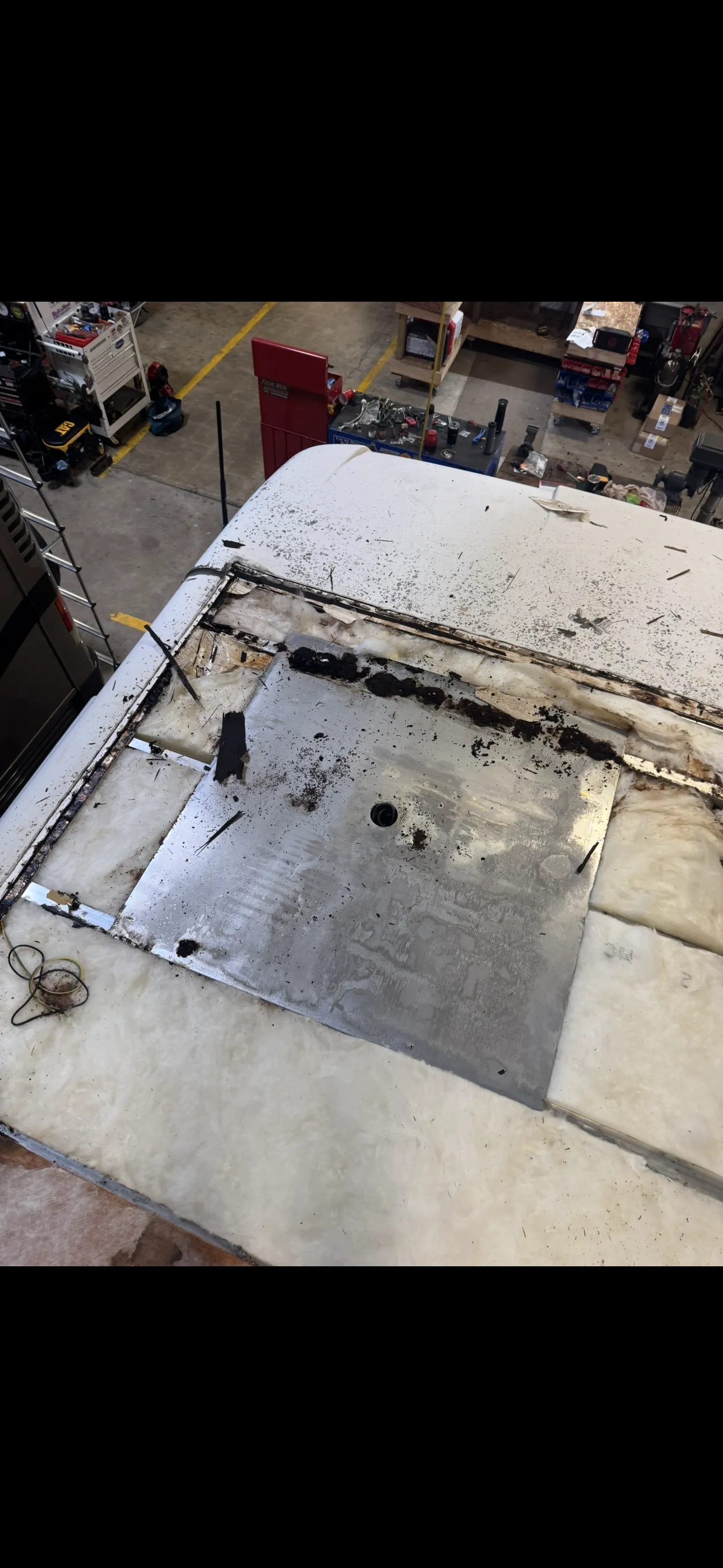
Water intrusion through the roof is the number one cause of premature RV retirement. A small crack in the sealant around a vent or skylight can send water into the wall cavity, where it rots framing, delaminates panels, and grows mold you can't see until the damage is extensive. At Four Wide Storage in Copley, OH, our Forest River Preferred technicians inspect, reseal, repair, and replace RV roofs to protect your investment from the top down.
A small roof leak becomes a $10,000 problem fast
How can a small roof leak turn into a $10,000 problem? Because water moves, and it doesn't stop once it gets in. A slow drip through a failed seal near a vent or air conditioner finds its way into the decking under the membrane, then into the rafters, then into the wall framing. Wood rot and delamination spread quietly, and by the time you notice a stain on your ceiling or a soft spot near your slide, the structural damage is already well underway. Sidewall delamination repairs alone can run $1,500 to $4,000 per panel. Add roof work on top of that and the bill climbs in a hurry.
Ohio's freeze-thaw cycles crack RV roof seals every winter
Why do Ohio's freeze-thaw cycles crack RV roof seals every winter? Northern Ohio gets some of the most punishing freeze-thaw weather in the country. In the Akron area, temperatures can swing above and below freezing more than 40 times in a single winter. Every one of those cycles expands and contracts the caulk, membrane edges, and rubber seals around your vents, skylights, and air conditioner. Over a season or two, that repeated movement causes seals to crack, pull away from the surface, and lose their waterproof bond. Most RV manufacturers recommend inspecting roof seals at least twice a year. In a climate like ours, that's not excessive caution. It's just smart ownership.
Most RV owners discover leaks after the damage is done
Why do most RV owners only discover roof leaks after the damage is already done? Because roof leaks in RVs are quiet. Water gets in through a tiny breach in a seal and travels along the interior structure, soaking into insulation and wood framing long before it shows up as a visible stain. Most owners only notice something is wrong when they find a soft spot in the floor, see bubbling on an exterior wall, or smell mildew inside the rig. By that point the water has usually been in there for months. Getting up for a visual inspection twice a year is the simplest early warning system available, and it costs a lot less than the alternative.
Regular resealing costs far less than full roof replacement
How much less does regular resealing cost compared to full roof replacement? A lot less. Seal inspections and targeted touch-ups typically run a few hundred dollars depending on what needs attention. A full roof replacement on a travel trailer or fifth wheel in the Copley area generally falls between $5,000 and $12,000 depending on the size of your rig and the material used. Some larger motorhomes run well above that. The RV owners in the Summit County area who avoid big roof bills are almost always the ones who stayed on top of annual inspections rather than waiting for a problem to announce itself. A few hundred dollars a year is reasonable protection for a significant investment.
Wall delamination starts at the roof, not the walls
If you're seeing wall delamination, how did it actually start at the roof? Delamination looks like a wall problem because that's where you notice it. But the water that causes it almost always entered somewhere above, through a failed seal around a vent, an air conditioner curb, or the edge of the roof membrane. It works its way down through the decking and insulation until it reaches the adhesive bonding your exterior panel to the wall framing. When that adhesive stays wet long enough, the bond fails and the panel begins to separate. Fixing the wall without also finding and sealing the source on the roof means the delamination will come back. We always start the diagnosis from the top down.